
On a sweltering October afternoon in 1990, Italy’s longest-serving postwar prime minister rose in the Chamber of Deputies and confirmed what dissident judges and persistent journalists had whispered for two decades. A secret army existed. NATO had built it. The CIA and MI6 had armed it. Its weapons were buried in forests from Trieste to Trondheim. And not a single one of the elected officials who had passed through Italy’s revolving-door governments had been told.
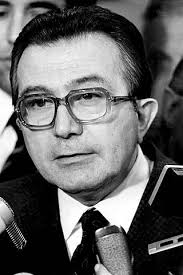
The man at the lectern was Giulio Andreotti, seven-time prime minister and master of Christian Democracy’s machine politics. The date: 24 October 1990. In his hand was a SIFAR military intelligence report titled The Special Forces of SIFAR and Operation Gladio. Within hours, parliaments in Brussels, Bonn, The Hague, and Madrid were demanding answers from their own intelligence services. Within a month, the European Parliament condemned the entire enterprise as a threat to democratic order.[1]
For most Italians, the revelation closed a circle that had been open for twenty years. Through the anni di piombo — the Years of Lead — bombs had ripped through banks, plazas, and railway stations across the country. The dead ran into the hundreds. Investigations had stalled. Evidence had vanished. Witnesses had died inconveniently. Now, finally, a name: Gladio, the sword. A network. A line that ran back to a CIA training base on Sardinia and a NATO command structure in Belgium.[2]
The official explanation was almost banal. Gladio had been a Cold War insurance policy. If Soviet tanks rolled across the Fulda Gap, sleeper cells of civilian volunteers would emerge to wage guerrilla war behind enemy lines. That much is documented. What remains contested, three decades later, is whether parts of that network turned their weapons inward — against the very democracies they had been sworn to defend.
For readers familiar with our earlier investigation into Operation Ajax in Iran, the architecture will feel familiar. Gladio belonged to the same family of postwar covert action — but on a continental scale, and aimed not at a single foreign government but at the political composition of half a dozen Western European countries.
I — The Stay-Behind Idea
The blueprint did not begin with NATO. It began with the British. During the Second World War, the Special Operations Executive trained a network of British civilians known as the Auxiliary Units — bakers, gamekeepers, schoolteachers — to wage sabotage behind enemy lines if the Wehrmacht crossed the Channel. The invasion never came, the Auxiliaries never fought. Yet the idea outlived them.[3]
By 1947, the geography of the threat had simply shifted east. Allied intelligence officers who had spent the war building partisan networks against the Germans now turned to the prospect of doing it again, this time against the Red Army. In Vienna, American agents quietly recruited former SS officers and Austrian Nazis to staff a clandestine communication network and stock arms dumps for guerrilla resistance against a Soviet invasion that planners considered likely within five years.[4]
The logic was strategically defensible. Western Europe lay open before a Soviet armoured thrust. Conventional defence was thin. A pre-positioned network of civilian saboteurs, hidden weapons caches, and short-wave radios offered an asymmetric answer. Yet from the very beginning the project carried an ideological cargo that would prove difficult to unload. Anti-communism was the founding premise. The same network that would harass Soviet supply lines in wartime could, in peacetime, be deployed against domestic communist parties — and Italy had the largest one in the Western world.
II — Sardinia, November 1956
In Italy, the formalisation came under Defence Minister Paolo Taviani. Taviani served from 1953 to 1958 and later told the magistrate Felice Casson that, during his time in office, the Italian secret services were “bossed and financed by the boys in Via Veneto” — meaning the CIA officers operating from the United States embassy in Rome.[5]
The Founding Document
According to a document released by Andreotti in late 1990, the CIA and Italy’s SIFAR military intelligence service signed a joint protocol in November 1956 to form a force of around 1,000 men capable of guerrilla warfare and espionage behind enemy lines.[6] A training base was established at Capo Marrargiu in north-western Sardinia, designated the Centro Addestramento Guastatori (CAG). Around 139 weapons and ammunition dumps — the so-called nasco caches — were buried across northern Italy, mostly in the Veneto, Trentino, and Friuli-Venezia Giulia regions closest to the Yugoslav frontier.[6]
A 1959 SIFAR report titled Le Forze Speciali del SIFAR e l’Operazione Gladio — released to the Italian Parliamentary Commission in 1990 — set out the operation in precise bureaucratic prose. Gladio was a stay-behind network. It was linked to NATO planning. Its members would activate only in wartime occupation. Whether the document told the whole truth would become the central question of every subsequent Italian inquiry.[7]
The 1959 SIFAR document — together with a series of internal memoranda released since — confirms that Italian recruits trained in demolition and clandestine communications at the Sardinia base. A March 1972 internal note specifically warned that using Gladio for “internal subversion” fell outside its statutory remit. Researcher Francesco Cacciatore argues, from declassified sources, that American pressure during the 1960s to expand the network’s peacetime role appears to have been resisted at the institutional level.[8] Other historians, most prominently Daniele Ganser, read the evidence very differently.
III — A Continent of Sleeper Cells
Italy was not unique. After the parliamentary investigations of 1990 and 1991, stay-behind structures were confirmed — to varying degrees of detail — in nearly every NATO member state in Western Europe, and in several neutral countries that officially had no business being in such a system at all.[9]
In Belgium, the network was called SDRA8. In the Netherlands, two parallel structures — Operatiën en Inlichtingen and a separate intelligence cell — operated semi-autonomously of NATO. Norway had ROC; Denmark had Absalon; West Germany had a network embedded inside the Federal Intelligence Service, with documented recruitment of former Wehrmacht and SS personnel in the early years. Greece had a stay-behind force known by various codenames including “Red Sheepskin.” Spain and Portugal, under their respective authoritarian regimes, fielded versions of the same. In Turkey, the network was called Counter-Guerrilla.[2]
Neutral Countries Were Not Neutral
The most awkward revelations came from countries that were not in NATO at all. Sweden, Finland, and Switzerland had each built their own variant. CIA officer William Colby, later director of the agency, wrote in his autobiography that he had personally helped establish stay-behind networks in Sweden, Norway, Denmark, and Finland in the early 1950s. Switzerland’s P-26 was discovered by chance in 1990, months before Andreotti’s revelation, when an unrelated affair forced parliamentary scrutiny of the defence ministry. Investigators concluded that British intelligence knew more about P-26 than the Swiss government itself.[10]
Coordination at the alliance level went through two bodies headquartered in Brussels after 1967 — the Clandestine Planning Committee (CPC), founded in 1951, and the Allied Clandestine Committee (ACC), founded in 1957. According to the Belgian parliamentary inquiry, the ACC was “responsible for coordinating the stay-behind networks in Belgium, Denmark, France, Germany, Italy, Luxembourg, Holland, Norway, United Kingdom and the United States.” Meetings were held once or twice a year. Member-state delegates were typically the senior officers running their respective national networks.[11]

IV — The Judge Who Wouldn’t Let Go
The cover began to crack not in 1990 but in 1984, in the office of a young Venetian magistrate named Felice Casson. Casson had reopened a long-dormant case: the 31 May 1972 car bombing in the hamlet of Peteano, near Gorizia. Three carabinieri had been lured to an abandoned Fiat 500 by an anonymous telephone tip; when one of them lifted the bonnet, the booby trap killed them all. For more than a decade the killing had been blamed on the far-left Red Brigades. The Brigades had nothing to do with it.[12]
Casson found a trail of fabricated evidence. The forensic report on the explosive had been falsified by an expert later identified as a member of Ordine Nuovo. Nobody had ever verified the anonymous tip implicating the Red Brigades. Most damning, the actual explosive had been C4 — a NATO-standard plastic explosive, the most powerful then available, and stored in the Gladio arms caches. By 1984, Casson had arrested a far-right militant named Vincenzo Vinciguerra, who promptly confessed.[13]
Vinciguerra did more than confess. He described the structure that had protected him afterwards, named Italian secret service officers who had spirited him to Francoist Spain, and explained — in the unsettling cadence of a man who believed he was telling the truth — what the network had been for.
“There exists in Italy a secret force parallel to the armed forces, composed of civilians and military men, in an anti-Soviet capacity… A super-organisation which, lacking a Soviet military invasion which might not happen, took up the task, on NATO’s behalf, of preventing a slip to the left in the political balance of the country.” — Vincenzo Vinciguerra, testimony to Italian magistrates, 1984[14]
V — The Strategy of Tension
Italians had a name for what Vinciguerra was describing. They called it the strategia della tensione — the strategy of tension. The phrase had first surfaced in the British press in the early 1970s. The theory ran like this: a series of unattributed bombings of civilian targets, blamed first on the left, would frighten the Italian middle class into demanding a strong-arm response. At its 1976 peak, the Communist Party polled over 34 per cent — and would be discredited by association with the violence. Centre of political gravity would shift rightward. In extremis, a military emergency might be declared.[15]
Vinciguerra spelled out the operational logic with chilling clarity. Targets had to be civilian, he said — ordinary people in ordinary places. The point was not to hit the state. It was to make ordinary Italians turn to the state, to demand the very repression the strategists wanted to deliver.
“You had to attack civilians — the people, women, children, innocent people, unknown people far removed from any political game. The reason was simple: to force the Italian public to turn to the state and ask for greater security.” — Vincenzo Vinciguerra, interview with Allan Francovich for the BBC, 1992[14]
VI — The Long Decade of Bombs
The slaughter that followed across Italy is documented in court records, parliamentary reports, and decades of investigative journalism. The death toll across the Years of Lead — counting attacks attributed to far-right, far-left, and unaffiliated actors between 1969 and the late 1980s — exceeded four hundred dead and thousands wounded, with right-wing massacres accounting for the great majority of civilian casualties.[16]
Piazza Fontana, 12 December 1969
The first detonation came at 4:37 in the afternoon, inside the headquarters of the Banca Nazionale dell’Agricoltura in Milan’s Piazza Fontana. Seventeen people were killed and eighty-eight wounded. Within hours, anarchists were rounded up. One of them, the railway worker Giuseppe Pinelli, fell — or was thrown — from a fourth-floor window of Milan police headquarters three days later. He was never charged. After thirty-six years of trials and appeals, in June 2005, the Italian Court of Cassation finally established that the bombing had been the work of a Padua-based cell of Ordine Nuovo, the neo-fascist group, led by Franco Freda and Giovanni Ventura. They could not be retried because of an earlier acquittal that had become final.[17]
Three decades after the bombing, General Giandelio Maletti, former head of Italian counter-intelligence, testified at a related trial that the massacre had been carried out by neo-fascists in conjunction with elements of the Italian security services on what he characterised as the “tacit approval” of the CIA — to discredit the Italian Communist Party.[18]
Brescia and the Italicus Train, 1974
The pattern continued. On 28 May 1974, a bomb concealed in a litter bin exploded during an anti-fascist rally in Piazza della Loggia in Brescia, killing eight and wounding more than a hundred. Members of Ordine Nuovo and an offshoot, Ordine Nero, were eventually convicted. On 4 August 1974, a bomb on the Italicus express train between Florence and Bologna killed twelve people and injured forty-eight. Investigators traced the attack to a Tuscan neo-fascist cell.[19]
Aldo Moro, 1978
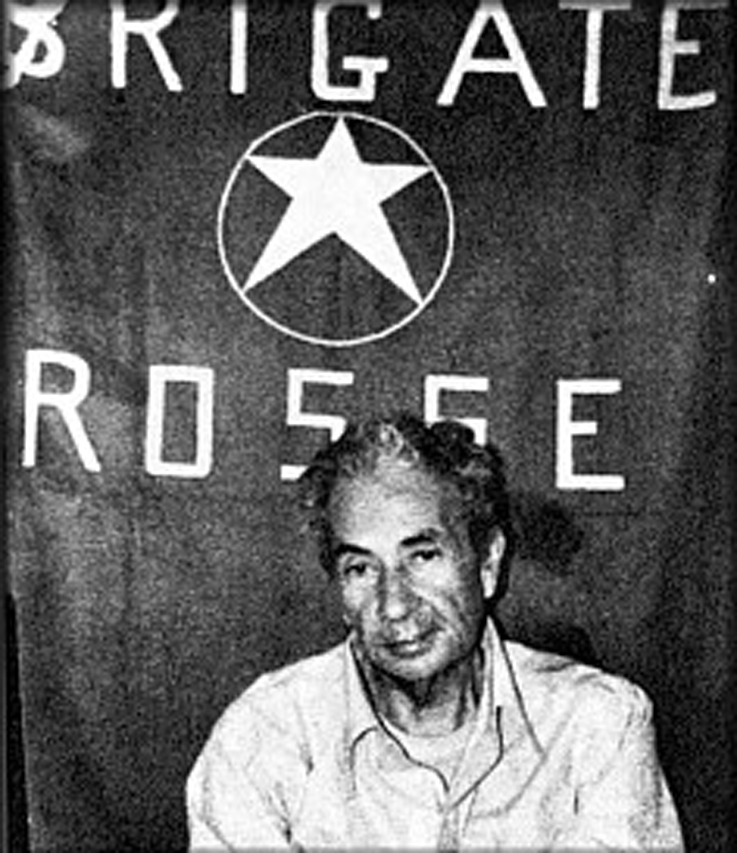
Then came the abduction that broke a generation. On 16 March 1978, in the via Mario Fani in Rome, a Red Brigades commando ambushed the convoy of Aldo Moro, leader of the Christian Democrats. His five bodyguards died on the asphalt. Moro himself was held in captivity for fifty-five days. The Red Brigades demanded the release of jailed comrades. The Andreotti government — backed publicly by the Communist Party — refused to negotiate. On 9 May 1978, Moro’s body was found in the trunk of a red Renault 4 parked in the via Caetani, symbolically equidistant from the headquarters of the Christian Democrats and the Communists.[20]
Moro had been the principal architect of the compromesso storico — the historic compromise that would have brought the Italian Communist Party into a governing coalition. Letters he wrote during his captivity, smuggled out and later authenticated, explicitly mentioned the existence of the stay-behind network. He told his captors that Andreotti was “too close to NATO” and warned that any deal with the West would be vetoed. The letters were inconvenient. Many never reached their addressees during the kidnapping. Others surfaced years later, in 1978 and again in 1990, in a Milan apartment that police had searched and apparently missed the first time.[20]
Bologna, 2 August 1980
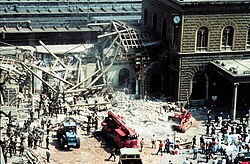
The bloodiest of all came on a Saturday morning in August. At 10:25, a suitcase bomb concealed in the air-conditioned waiting room of Bologna Centrale railway station detonated. The blast collapsed the roof, destroyed most of the main building, and hit a Bologna–Ancona train on the first platform. Eighty-five died. More than two hundred were wounded. The youngest victim was three; the oldest, eighty-six. Prime Minister Francesco Cossiga’s government initially claimed a boiler had exploded.[21]
It was not a boiler. The bomb contained roughly twenty-three kilograms of TNT-based explosive. Within weeks, the Bologna prosecutor had issued arrest warrants for twenty-eight far-right militants. After fifteen years of trials, Valerio Fioravanti and Francesca Mambro — both of the neo-fascist Nuclei Armati Rivoluzionari — received life sentences upheld by the Court of Cassation in November 1995. A third NAR member, Luigi Ciavardini, received thirty years in 2007. In April 2022, the Bologna court convicted Paolo Bellini of Avanguardia Nazionale as a direct participant in the attack.[22]
Most consequentially, in the post-2017 trials, the Bologna Corte d’Assise formally identified Licio Gelli — master of the Propaganda Due (P2) masonic lodge — and other P2 figures as having financed and masterminded the attack. P2 had been outlawed in 1981, but its membership list, recovered in a police raid on Gelli’s villa, contained nearly a thousand names: senior military officers, intelligence chiefs, magistrates, journalists, and politicians. Generals Pietro Musumeci of SISMI and Giuseppe Belmonte were convicted of falsifying evidence to divert the Bologna investigation, including planting a suitcase of explosives on a train to frame two unrelated right-wing fugitives.[23]
VII — The Andreotti Bombshell
By 1990, judicial investigators in Italy had been picking at the thread for years. In August of that year, a Venetian magistrate working alongside Casson obtained authorisation to enter the SISMI archives. The files he found there triggered the political earthquake that followed. On 24 October 1990, after Casson’s findings could no longer be suppressed, Andreotti rose in the Chamber of Deputies and confirmed Gladio’s existence.[1]
Andreotti characterised it carefully — as a “structure of information, response and safeguard,” with arms caches and reserve officers. He provided Senator Giovanni Pellegrino’s parliamentary commission with a list of 622 civilian members. Critics noted that the list was incomplete; Antonio Arconte, one of those omitted, would later describe a network considerably more entangled with active Italian intelligence than Andreotti was willing to acknowledge.[24] The prime minister also claimed the Italian services had joined the Allied Clandestine Committee only in 1964 — a timeline that recently declassified documents complicate substantially.[8]
The European Reaction
The political cost across Europe was immediate. Belgium’s defence minister confirmed a Belgian Gladio within days. The Belgian parliamentary committee discovered that the ACC had held a meeting in Brussels as recently as 23–24 October 1990 — the very week Andreotti was preparing his speech. France’s president François Mitterrand initially denied any French stay-behind network existed; Andreotti embarrassed him by confirming that French officers had attended the October ACC meeting. The Netherlands, Greece, Spain, Portugal, Germany, and Switzerland all confirmed networks of their own.[25]
On 22 November 1990, the European Parliament passed a resolution condemning the clandestine creation of the networks and calling for full investigations. The text was unusually sharp. It expressed alarm at “decision-making and operational bodies which are not subject to any form of democratic control,” protested the role of certain US military personnel at SHAPE, and called on every member state to dismantle clandestine paramilitary networks. Three countries — Italy, Belgium, and Switzerland — conducted formal parliamentary investigations. Most did not. The administration of George H. W. Bush, preparing for war against Saddam Hussein in the Persian Gulf, declined to comment substantively. NATO neither confirmed nor denied. CIA Freedom of Information Act requests for stay-behind material have since been refused.[9]
VIII — What the Documents Say, and What They Don’t
Three decades after the revelation, the documentary record is fuller than it once was — but it remains partial, and historians read it differently. There is no serious dispute that the stay-behind networks existed, that they were armed and trained in coordination with NATO, and that the CIA and MI6 supplied much of the funding and equipment. The records released in Italy, Belgium, and Switzerland confirm those facts in dry institutional prose.[7]
What remains contested is the chain of command between the official stay-behind organisations and the right-wing terror networks that carried out the strategy of tension. Three positions roughly divide the historiography.
The Ganser Thesis
Swiss historian Daniele Ganser, whose 2005 book NATO’s Secret Armies remains the most widely cited English-language treatment, argues that Gladio infrastructure — arms caches, protected operatives, institutional cover — was repeatedly used in domestic terror operations across Europe, with at least the tacit approval of senior NATO and CIA figures.[2] Critics note that some of his sourcing leans on memoirs and journalism rather than primary archival material.
The Institutional-Distinction Thesis
A second school, represented by Italian historian Francesco Cacciatore, argues that primary-source documents released to the Italian Parliamentary Commissions show the formal Gladio structure resisted American pressure during the 1960s to deploy the network against internal subversion. On this reading, the institutional Gladio organisation should be distinguished from the deviated activities of individual intelligence officers and the right-wing terror cells they cultivated.[8]
The Italian Senate’s Conclusion
In 2000, a parliamentary commission of the Italian Senate, chaired by senators from the centre-left Olive Tree coalition, concluded that the strategy of tension had been supported by elements of the United States government to prevent the Italian Communist Party from reaching executive power. Right-wing centrist members of the commission filed minority reports rejecting the conclusion.[26]
Most archive-based researchers now accept a position between the strongest and weakest formulations. The official stay-behind apparatus and the perpetrators of the Years of Lead were not identical. They overlapped — sometimes in personnel, often in equipment, frequently in protection from prosecution. Yet the line between approval and complicity is fine, and the dead at Piazza Fontana, Brescia, the Italicus, and Bologna do not appear to have cared which side of it their killers stood on.
IX — Why It Still Matters
The Italian Communist Party never entered a national governing coalition. Its successor, the Democratic Party of the Left, formed in 1991 — the year after the Gladio revelation, and after the Soviet Union itself had ceased to be a threat. The first time an Italian government included the political heirs of the historic PCI was 1996, four decades after the founding of Gladio. Whatever else the operation may have failed to do, it succeeded in its principal political purpose.[25]
The documentary record continues to thin out. Many of the original Gladio files were destroyed in the panic of October 1990. Those that survive remain classified in NATO archives. As Cacciatore notes, FOIA requests to the CIA on stay-behind material have been consistently refused, including those processed via the National Security Archive and through formal diplomatic channels. The full primary record may never become available.
Yet the broader pattern — covert action, plausible deniability, blowback measured in decades — is now familiar enough to readers of our earlier investigations. We saw it in Operation Paperclip’s absorption of Nazi scientists, in the Phoenix Program’s counterinsurgency in Vietnam, and in Operation Ajax in Iran. Gladio is the European chapter of the same story — written in Italian, German, Dutch, Greek, and Turkish, but with the same authors holding the pen.
| Codename (Italy) | Gladio (“the sword”) |
|---|---|
| Generic term | Stay-behind networks |
| Founding bodies | Western Union (1948); NATO (after 1949); CIA; MI6 |
| Italian formalisation | CIA–SIFAR protocol, November 1956[6] |
| Italian training base | Centro Addestramento Guastatori (CAG), Capo Marrargiu, Sardinia |
| Coordinating bodies | Clandestine Planning Committee (1951); Allied Clandestine Committee (1957) |
| Italian arms caches | Approximately 139 nasco caches in northern Italy[6] |
| Italian membership (per Andreotti) | 622 civilians[24] |
| First public exposure | Vincenzo Vinciguerra trial testimony, 1984 |
| Official confirmation | Giulio Andreotti to Italian parliament, 24 October 1990 |
| European Parliament resolution | 22 November 1990 |
| National investigations | Formal inquiries in Italy, Belgium, Switzerland |
Coda — The Long Shadow
Three things outlived Gladio. First was the principle of plausible deniability — a great power shaping the politics of an allied democracy through covert means, never to be held to account in any forum its citizens could see. Second was the method: a stable of trained, protected, ideologically reliable irregulars, available for use against an internal enemy when the foreign one failed to materialise. Third was a habit of forgetting, on both sides of the Atlantic, about consequences that arrive decades after decisions.
The dead at Bologna are not the only bill that came due. Italy spent the 1990s in slow-motion political collapse — Mani Pulite, the dissolution of Christian Democracy, the rise of figures who would shape European populism for thirty years. Trust in institutions never fully recovered. Operation Ajax in Iran created an external enemy that came back in 1979. Gladio created an internal corrosion — a forty-year erosion of the relationship between citizens and the security services nominally working on their behalf. In the long ledger of the Cold War, that bill is still being paid.
References
- “Operation Gladio.” Wikipedia. Comprehensive synthesis of declassified European and Italian materials. Link
- Daniele Ganser, NATO’s Secret Armies: Operation Gladio and Terrorism in Western Europe. London: Frank Cass, 2005.
- “Stay-behind.” Wikipedia. Overview of British Auxiliary Units and the European stay-behind networks. Link
- Christopher Simpson, Blowback: America’s Recruitment of Nazis and Its Effects on the Cold War. New York: Weidenfeld & Nicolson, 1988.
- William Scobie, “The Long Black Hand of the CIA in Italy.” The Observer, 18 November 1990.
- Wolfgang Achtner, reporting on the Andreotti documents. Sunday Independent, 11 November 1990, reproduced via Statewatch. Link
- Stato Maggiore della Difesa, SIFAR – Ufficio “R,” Sezione SAD, Le Forze Speciali del SIFAR e l’Operazione Gladio, 1 June 1959; reproduced in Coglitore and Scarso, La notte dei gladiatori.
- Francesco Cacciatore, “The Italian ‘Stay-Behind’ Network — the origins of operation ‘Gladio’.” Intelligence and National Security, Routledge. Link
- European Parliament, Resolution on the Gladio Affair, OJ C 324, 22 November 1990. Full text: Link
- William Colby, Honorable Men: My Life in the CIA. New York: Simon & Schuster, 1978; and Daniele Ganser, “The British Secret Service in Neutral Switzerland.” Intelligence and National Security, Vol. 20, No. 4 (2005).
- Sénat de Belgique, Enquête parlementaire sur l’existence en Belgique d’un réseau de renseignements clandestin international. Brussels, 1 October 1991.
- “Peteano bombing.” Wikipedia. Account of the 1972 attack and Casson’s reopened investigation. Link
- Daniele Ganser, “The Ghost of Machiavelli: An Approach to Operation Gladio and Terrorism in Cold War Italy.” Crime, Law and Social Change, 45 (2006).
- Vincenzo Vinciguerra, testimony to Judge Felice Casson, 1984; and interview with Allan Francovich, BBC2 Timewatch — Operation Gladio, 1992.
- Philip Willan, Puppetmasters: The Political Use of Terrorism in Italy. London: Constable, 1991.
- “Years of Lead (Italy).” Wikipedia. Overview of casualties and attacks 1969–c.1988. Link
- “Piazza Fontana bombing.” Wikipedia. With reference to the June 2005 Court of Cassation ruling. Link
- Testimony of Gen. Giandelio Maletti, Brescia trial of right-wing extremists, March 2001; reported widely including The Guardian, 26 March 2001.
- “Piazza della Loggia bombing” and “Italicus Express bombing.” Wikipedia.
- “Kidnapping of Aldo Moro.” Wikipedia; and Richard Drake, The Aldo Moro Murder Case. Cambridge, MA: Harvard University Press, 1995.
- “Bologna train station bombing of 1980.” Encyclopaedia Britannica. Link
- “Bologna massacre.” Wikipedia. With reference to the 1995 Cassation ruling, the 2007 Ciavardini sentence, and the 2022 Bellini conviction. Link
- “Propaganda Due.” Wikipedia; and judicial summaries of the Bologna Corte d’Assise rulings on P2 financing of the massacre.
- Statement of Giulio Andreotti to the Chamber of Deputies, 24 October 1990; and the report of the Commissione Stragi chaired by Senator Giovanni Pellegrino.
- “The puzzling story of NATO’s secret armies during the Cold War.” History News Network, 17 June 2005. Link
- Commissione parlamentare d’inchiesta sul terrorismo in Italia, final report, 2000; National Security Archive, George Washington University, materials on stay-behind operations and FOIA correspondence.
Further Reading
If you want to go deeper into the documentary record:
- NATO’s Secret Armies: Operation Gladio and Terrorism in Western Europe — Daniele Ganser. The most comprehensive English-language treatment, with extensive citations to parliamentary inquiries.
- Blowback: America’s Recruitment of Nazis and Its Effects on the Cold War — Christopher Simpson. The essential prehistory: how former SS and Wehrmacht personnel ended up inside the early stay-behind structures.
- The Devil’s Chessboard: Allen Dulles, the CIA, and the Rise of America’s Secret Government — David Talbot. The institutional biography of the man who authorised Gladio’s parent operations.
Affiliate disclosure: As an Amazon Associate, Decoding History earns from qualifying purchases. The links above are affiliate links — using them costs you nothing extra and helps fund our research.