
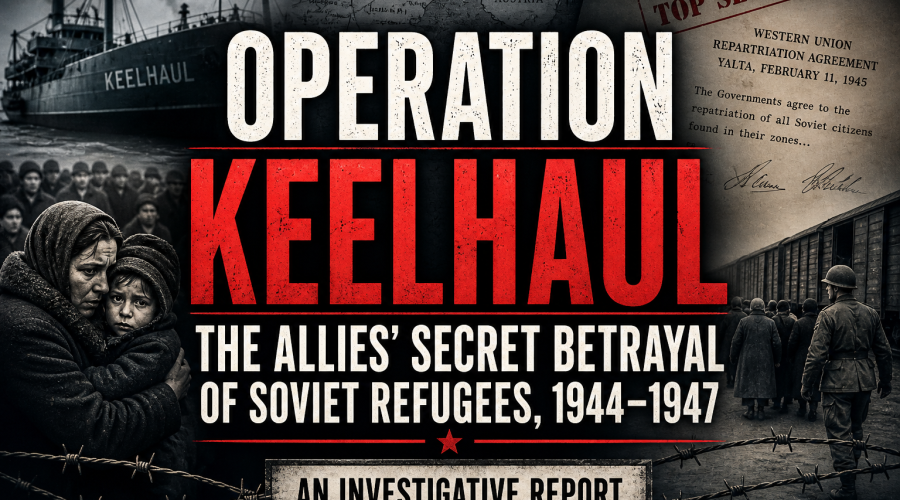
At the end of the Second World War, the Western Allies faced millions of Soviet citizens stranded in liberated Europe — soldiers, slave laborers, families, refugees. Many begged not to be sent home. They knew what awaited them. The Allies sent them anyway. It was called Operation Keelhaul, and for decades the records were sealed.
On the morning of June 1, 1945, British soldiers surrounded a refugee camp at Peggetz, outside the Austrian town of Lienz, on three sides — tanks to the north, south, and east. The fourth side was the Drau River, swift and deep. Inside the camp, some 2,500 Cossack women, children, and elderly men had gathered around a field altar for an Orthodox liturgy. Black banners hung from every barrack. They had spent the previous days in prayer, because they knew what was coming. When the trucks arrived and the British soldiers moved in, people threw themselves from bridges, waded into the current, beat themselves with rocks, or simply held onto one another as clubs rained down.[1] Those who survived were loaded into cattle cars and transported east to Soviet authorities.
What happened at Lienz was not an isolated incident. It was one episode in a sweeping, largely secret Allied policy: the forced return of several million Soviet citizens — soldiers, civilians, refugees, and people who had never set foot in the Soviet Union — to a regime that regarded them as traitors. The policy had a legal foundation in a secret agreement signed at Yalta in February 1945. Its most deliberate phase, narrowly defined, ran from August 1946 to May 1947 and carried the codename Operation Keelhaul. The name derived from the harshest punishment in the age of sail: dragging a sailor under the keel of a ship, almost always to his death.[2]
Aleksandr Solzhenitsyn, who survived the Soviet labor camp system and would spend the rest of his life documenting it, called the forced repatriation “the last secret of World War II.”[3] The classified U.S. Army records were sealed in September 1948 and remained largely unknown to the public for more than a generation. What follows is the documented history of how it happened, who decided it, and what became of those who were sent east.
I — The Name and the Bargain
The word “keelhaul” entered English from Dutch in the seventeenth century. It described a punishment used in the Dutch and later British navies: a condemned sailor was bound with ropes, thrown overboard, and dragged under the keel of the ship from one side to the other. Barnacles on the hull lacerated the body; the trip almost always proved fatal by drowning or blood loss. That Allied commanders chose this term as the codename for a repatriation program tells you something about their private assessment of it.
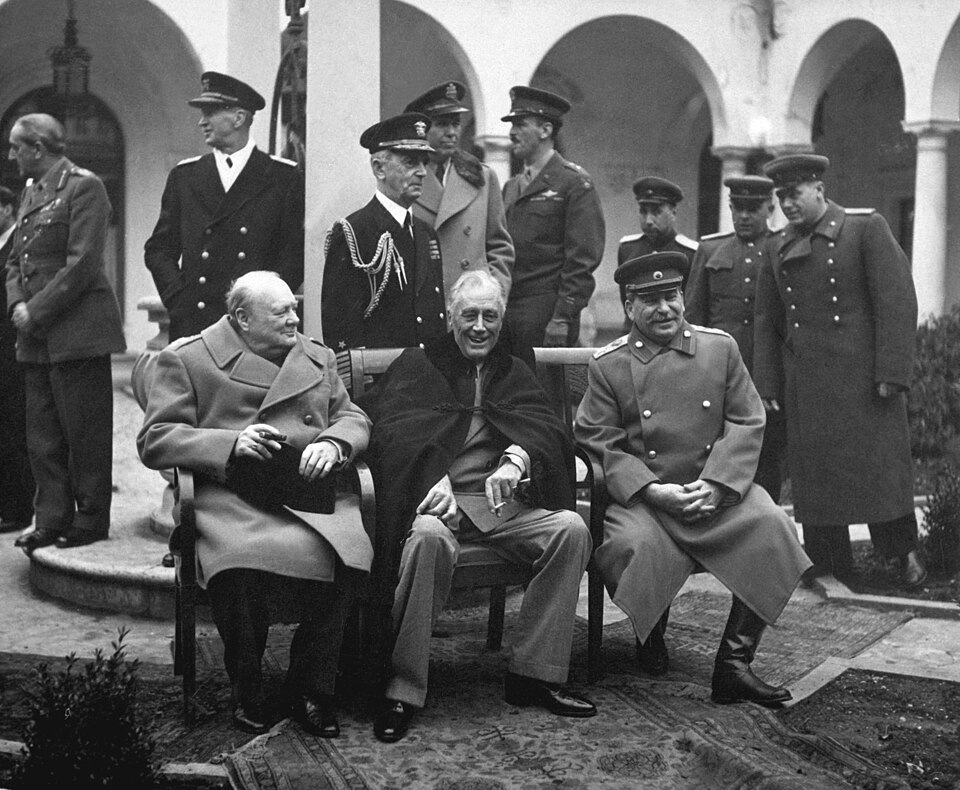
The legal framework came from Yalta. On February 11, 1945, as the final shape of postwar Europe was being negotiated in the Crimea, American and Soviet representatives signed a bilateral agreement on the exchange of liberated prisoners of war and civilians. The British concluded an identical deal the same day.[4] The text committed the Western Allies to return all Soviet citizens found in their zones. In exchange, Stalin agreed to hand over British and American POWs whom the Red Army had already liberated from German camps in Poland and eastern Germany.
The Western rationale was straightforward and, in a narrow tactical sense, compelling. By early 1945, an estimated 75,000 American and 50,000 British prisoners of war were in Soviet-held territory.[5] Allied commanders feared Stalin would hold those men hostage if the West refused his repatriation demands. The bargain, in short, was: we give you your people back, and you give us ours.
What the negotiators did not fully reckon with — or chose to ignore — was that the Soviet government considered its own returning citizens not as liberated victims but as potential traitors. Soviet military doctrine, enforced by Stalin’s Order No. 270 of August 1941, held that any Red Army soldier who surrendered to the enemy rather than fight to the death was guilty of treason against the motherland. The millions of Soviet POWs taken by Germany in the catastrophic 1941–42 campaigns had not chosen defeat; the Wehrmacht’s encirclement operations destroyed entire armies in days. Nevertheless, under Soviet law, the men who survived German captivity were suspect by definition. Many of those the Western Allies were now promising to return already knew they faced the Gulag, or worse.[6]
II — Five Million People Without a Country
To understand the scale of what followed, consider what Europe looked like in the spring of 1945. The collapse of Nazi Germany had released an enormous human tide. German factories and construction sites had run on forced labor from across occupied Europe — the Ostarbeiter, or eastern workers. Soviet POW camps inside Germany had held millions; the mortality rate was staggering, but millions survived. Anti-Communist Russians had served in German auxiliary units or simply been swept westward by the retreating Wehrmacht. By May 1945, an estimated five million people of Soviet origin were located in territory now under Western Allied control.[7]
Who Were Displaced?
The populations caught in the repatriation dragnet broke down into several overlapping categories. The largest group — some three million — were forced laborers, civilians seized by the Germans during the occupation of Soviet territory and transported west to work in factories, farms, and mines.[7] These people had done nothing to invite their displacement; they were victims twice over.
A second large group were Red Army POWs who had survived German captivity. A third, smaller but historically significant group were active collaborators: men who had volunteered for German service or joined anti-Soviet formations. And then there was a fourth category that cut across all the others: the émigré Russians, people who had fled the Bolshevik Revolution as far back as 1919 and had never held Soviet citizenship at all. Under the law, the Yalta agreement did not apply to them. In practice, as events would show, the distinction was often deliberately ignored.
The Cossacks: A Special Case
The Cossacks were the most historically complex of these groups. The Cossack communities of the Don, Kuban, and Terek had been targets of Bolshevik policy since the 1920s — subjected to forced collectivization, famine, and what historians call the Decossackization campaign. When German troops reached the North Caucasus in 1942, many Cossacks sided with the invaders in the belief that any outcome was better than continued Soviet rule.
Tens of thousands, with their families, retreated westward alongside the German forces as the tide turned. By May 1945, roughly 50,000 Cossack fighters and civilians had reached Allied-occupied Austria.[8] They believed, on the basis of assurances they had been given, that surrendering to the British would protect them from Soviet justice.
III — The British Begin: 1944–1945
Britain had, in fact, begun forcible repatriations before the Yalta agreement was signed. As early as October 1944, British forces handling Soviet nationals captured in German uniform started shipping them east.[9] Yalta formalized and expanded what had been a more improvised practice.
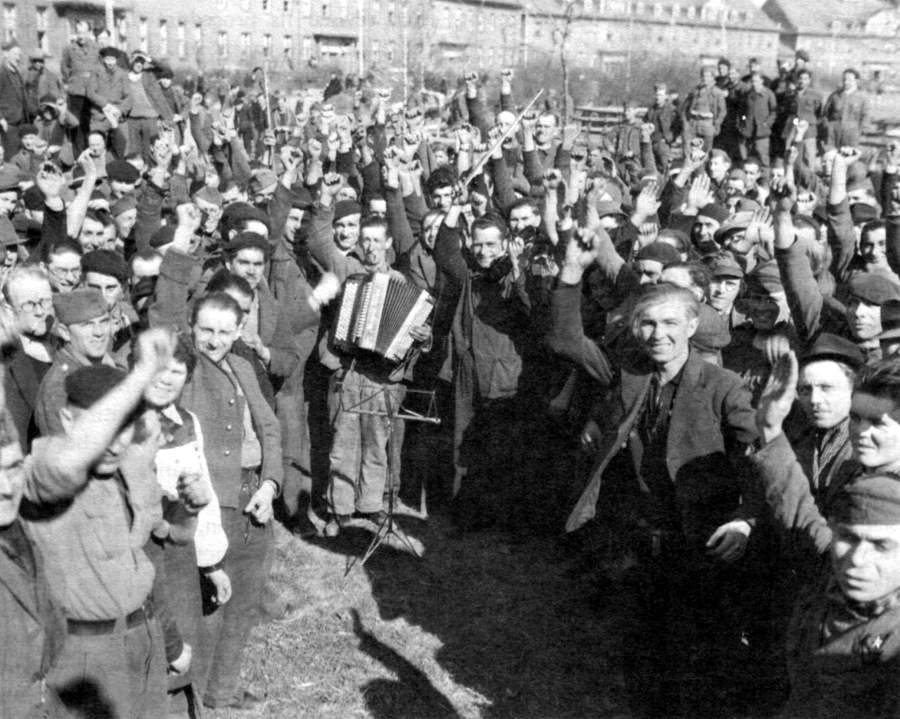
The mass repatriation operations began in earnest in May 1945. Between May and September of that year, the Supreme Headquarters Allied Expeditionary Force (SHAEF) transferred 2,034,000 Soviet citizens from Western-controlled zones to Soviet hands.[10] In those first chaotic months, resistance among the repatriated was limited. Many genuinely wanted to go home; word of what awaited returnees had not yet filtered back. Yet even in those early transfers, Allied soldiers encountered men and women who made their terror unmistakable.
One American officer assigned to a screening team, Ghinghis Guirey, later reported: “The most unpleasant aspect of this unpleasant business was the fear these people displayed. Involuntarily one began to look over one’s shoulder. I heard so many threats to commit suicide from people who feared repatriation that it became almost commonplace. And they were not fooling.”[3]
Three volumes of U.S. Army records documenting the forced repatriation program were classified Top Secret on September 18, 1948, under file number 383.7-14.1. The title given to the records was straightforward: “Forcible Repatriation of Displaced Soviet Citizens — Operation Keelhaul.” They remained sealed for decades. Julius Epstein, the Austrian-born American journalist who eventually exposed the program, spent years battling military and State Department obstruction before a partial version of the record was made available to him through pressure on Secretary of State John Foster Dulles in the mid-1950s.[2]
IV — The Tragedy at Lienz
The Cossack handover at Lienz remains the most documented — and most contested — single episode in the broader repatriation story. The Cossack Corps under General Timofey Ivanovich Domanov had entered Austria via the Plöcken Pass from Italy in late April 1945, settling with their families along the Drau Valley near Lienz. British forces interned them at Camp Peggetz, provided food, and treated them — at least initially — with civility. Many Cossacks, having surrendered voluntarily, concluded they were safe.[8]
The Officers Are Taken
On May 26, a British order arrived: all Cossack officers were to surrender their pistols. Two days later, on May 28, the British military informed the Cossack leadership that an important conference was to be held with British officials. The officers were told they would return to Lienz by 18:00 that evening. A British officer reportedly told them: “I assure you, on my word of honour as a British officer, that you are just going to a conference.”[1]
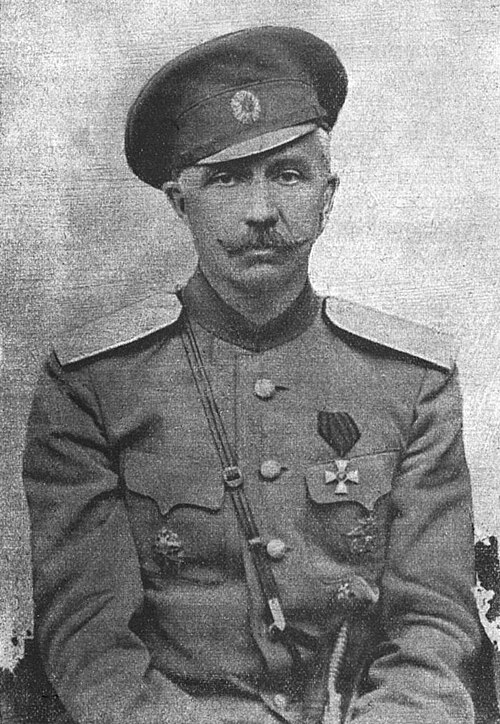
No conference occurred. On May 28, 2,046 disarmed Cossack officers and generals — including the elderly Ataman Pyotr Krasnov and General Andrei Shkuro, both of whom had fought against the Bolsheviks since 1918 and had never held Soviet citizenship — were transported by British vehicles to a Soviet-controlled transfer point and handed to the NKVD.[11] Krasnov was 76 years old. He had last lived in Russia before the Revolution. In January 1947, he was hanged in Moscow as a traitor.
June 1 — The Families Are Taken
Three days after the officers were taken, British troops returned for the families. The scene on June 1 was one that survivors spent the rest of their lives trying to describe. The Cossacks in Camp Peggetz had erected a field altar and gathered for a final liturgy, thousands of people — aged, women, children, cadets — standing in prayer with black banners flying from the barracks. British tanks and armed soldiers surrounded the camp on three sides. Trucks waited on the road. A freight train sat on the nearby rails.[1]
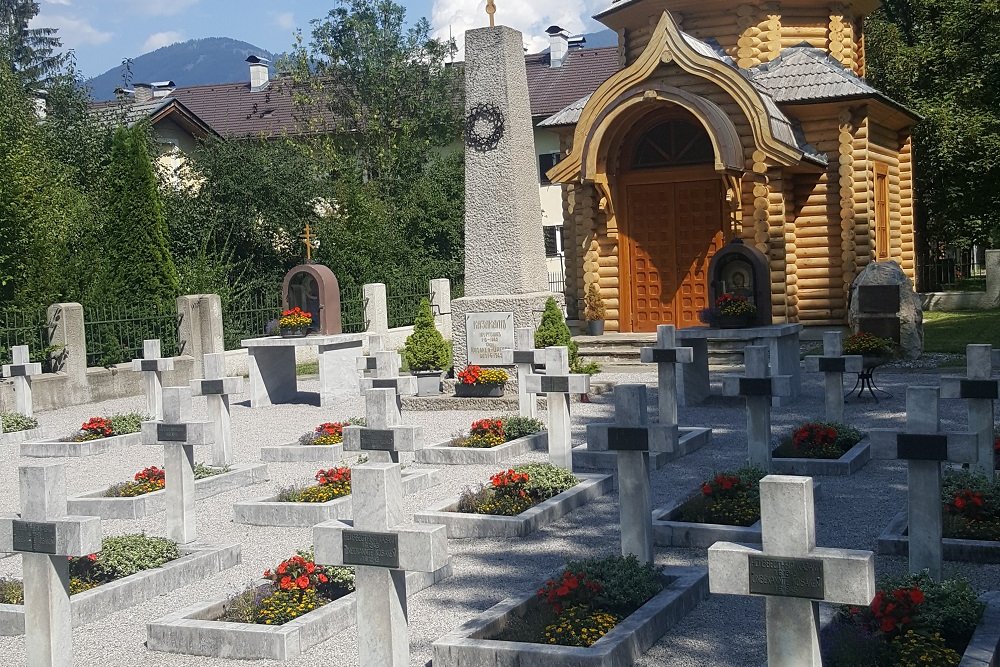
When the order came to load the trucks, the Cossacks refused. British soldiers moved in with clubs and rifle butts. People jumped into the Drau River. Some drowned immediately; others were recovered downstream. Dozens committed suicide by hanging, shooting, or self-inflicted wounds. Approximately 700 were buried in the Lienz cemetery and 28 nearby mass graves; another 600 reportedly drowned.[12] In all, across the Drau Valley operations on May 29, June 1, and June 3, roughly 22,502 Cossacks were loaded into cattle cars and transported east.[11]
“The NKVD or the Gestapo would have slain us with truncheons. The British did it with their word of honour.”
The British Foreign Office had issued explicit guidance that non-Soviet citizens — that is, those who had not held Soviet citizenship as of September 1, 1939 — were not to be compulsorily returned.[3] This guidance was ignored on the ground. Brigadier Toby Low (later Lord Aldington), chief of staff to the British forces in Austria, issued a standing order: “Individual cases will not be considered unless particularly pressed … In all cases of doubt, the individual will be treated as a Soviet national.”[13]
V — Americans Follow Suit
The United States ran parallel operations, though American forces were somewhat more reluctant than the British. The pivotal confrontation came at Fort Dix, New Jersey, in June 1945. Approximately 154 Soviet prisoners of war — men who had been transported to the United States — were scheduled for repatriation. On June 29, learning of the transfer order, they barricaded themselves in their barracks and attempted mass suicide. American guards fired tear gas into the building; when the prisoners broke out, seven were shot by guards. In the barracks afterward, investigators found three men dead by hanging and fifteen additional nooses already prepared.[14]
News of the Fort Dix incident briefly reached the press, creating enough political pressure to temporarily suspend the next shipment. However, in August 1945, Secretary of State James Byrnes authorized extradition “in conformity with commitments taken at Yalta,” and the transfers resumed.[14]
Operations at the former German concentration camps of Dachau and Plattling in Bavaria replicated the scenes from Lienz on a smaller scale. At Plattling, American GIs conducted a nighttime operation: they rousted terrified Russians from their beds at gunpoint and herded them into trucks. Hours later, the soldiers delivered their prisoners to Soviet trains waiting in the Bavarian forest near the Czech border. Historian Nikolai Tolstoy, who documented the Plattling operation, recorded that the Americans returned from the handover “visibly shamefaced,” having witnessed rows of bodies already hanging from nearby trees.[3] His accounts of specific atrocities have been disputed by other historians as relying too heavily on fragmentary testimony; the general outline of brutal repatriations at Plattling, however, is established by multiple sources.[15]
VI — Vlasov’s Army and the Limits of the Bargain
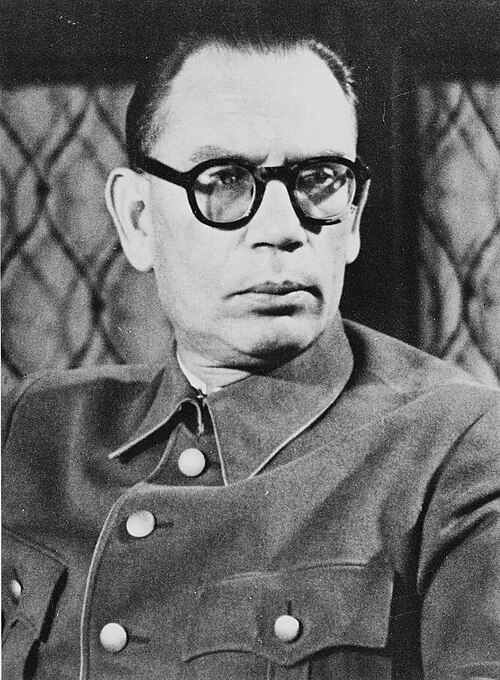
The Russian Liberation Army, or ROA, commanded by General Andrei Vlasov, presented a particular challenge. Vlasov himself had been one of the most decorated Soviet generals of 1941–42 — a hero of the defense of Moscow — before his capture by the Germans in July 1942. Under German pressure, he agreed to form a Russian army to fight Stalin, arguing that he was not fighting for Germany but against Bolshevism. His actual military effectiveness was limited: only in the final weeks of the war did the Germans allow him to deploy ROA units in combat, and they saw little action before Germany collapsed.[9]
Vlasov concentrated his forces near the American lines in Austria, hoping to negotiate some form of asylum. American commanders initially accepted his surrender. Then, under Soviet pressure and in compliance with Yalta commitments, they handed him over. Vlasov was taken to Moscow, tried for treason, and hanged in August 1946.[9] Approximately 50,000 of his soldiers were transported to the Soviet Union; most were sentenced to hard labor or execution.
“That our Armed Forces should have adopted this term as its code name for deporting by brutal force — to concentration camp, firing squad, or hangman’s noose — millions who were already in the lands of freedom, shows how little the high brass thought of their longing to be free.”
VII — Operation Keelhaul Proper: 1946–1947
By 1946, the mass repatriations were largely complete. However, several thousand Soviet nationals remained in camps across Italy, classified under the McNarney-Clark Directive as having served in the German armed forces and therefore subject to compulsory handover. The operation to process these remaining cases was given the formal codename Keelhaul.
Between August 14, 1946, and May 9, 1947, British and American forces systematically screened the camps at Bagnoli, Aversa, Pisa, and Riccione in northern Italy, selecting approximately 1,000 individuals for transfer.[16] Unlike the chaotic mass operations of 1945, this phase was deliberate and carefully documented — which is partly why the paper trail was so thoroughly classified afterward. Officers conducting the screenings felt, according to the Hillsdale College account published decades later, that it was privately their duty to shield as many individuals as possible. They were told instead to fill their quota.[17]
The final transfer took place at St. Valentin in Austria on May 8–9, 1947, under the codename “East Wind.” It marked the formal end of the Allied forced-repatriation program — though scattered transfers continued beyond these dates in some zones. Parallel to Operation Keelhaul ran the lesser-known Operation Fling, a British program that assisted selected Soviet defectors to escape westward. The irony was not lost on those who knew of both operations.[16]
Operation Keelhaul: The File
| Official codename | Operation Keelhaul (Italy phase); “East Wind” (final transfer) |
| Broader program | Yalta-mandated forced repatriation, 1944–1947 |
| Legal basis | Bilateral Yalta agreements, signed February 11, 1945 |
| Keelhaul dates | August 14, 1946 – May 9, 1947 |
| Final transfer | St. Valentin, Austria, May 8–9, 1947 (“East Wind”) |
| Camps processed | Bagnoli, Aversa, Pisa, Riccione (Italy) |
| Total repatriated (Italy phase) | Approximately 1,000[16] |
| Total repatriated (all phases) | Estimated 2–5 million; SHAEF alone: 2,034,000 (May–Sept 1945)[10] |
| Records classified | September 18, 1948, by U.S. Army (file no. 383.7-14.1) |
| First major exposure | Julius Epstein, Operation Keelhaul (1973) |
| British exposure | Nicholas Bethell, The Last Secret (1974) |
GET FUTURE DECODED HISTORY STORIES DELIVERED TO YOUR INBOX.
Unsubscribe Anytime
VIII — What Happened to Those Who Were Sent Back
The Soviet government’s handling of returnees confirmed the worst fears of those who had resisted repatriation. OST workers — the forced laborers — were often classified as collaborators by virtue of having lived under German occupation, regardless of the circumstances. Returning POWs were interrogated by SMERSH (an acronym from “Death to Spies”), the Soviet military counterintelligence agency. Many were sent to filtration camps for screening; a significant proportion were then dispatched to the Gulag.[6]
The Fate of Collaborators and Leaders
Those who had actively served in German formations faced summary execution or sentences of twenty-five years’ hard labor. General Krasnov and General Shkuro were hanged in Moscow in January 1947 along with several other Cossack leaders handed over at Lienz. General Vlasov was hanged in August 1946. The senior figures of the ROA and the Cossack formations were systematically eliminated; their men were dispatched to the labor camps of Siberia and the far north, to mines at Vorkuta and Kolyma where the mortality rate was high.[11]
The Human Cost
Historians dispute the total death toll with precision. What the evidence establishes clearly is that, of the millions returned, a substantial proportion — possibly as many as half, according to some estimates — faced either execution or the Gulag. The OST workers, the largest single group, generally fared better than the soldiers, but “better” in this context meant years of internal exile, restrictions on residence, and the permanent political stigma of having been in the West.[7]
IX — The Historians Who Broke the Silence
For nearly three decades the operation remained what Solzhenitsyn had called it — a secret, known to survivors and a handful of researchers but absent from the official record and public consciousness. The first serious breach came from Julius Epstein, an Austrian-born journalist and research fellow at the Hoover Institution at Stanford. Working from the early 1950s onward, Epstein pressed the U.S. government for access to the classified repatriation records. He eventually persuaded Secretary of State John Foster Dulles to declassify a portion of the files in 1955; he published his first major account in the Brooklyn Tablet in May of that year.[18] His full book, Operation Keelhaul: The Story of Forced Repatriation from 1944 to the Present, appeared in 1973. It was the first work to use the codename as the organizing title for the entire forced-repatriation program.
The British Perspective
The following year, British journalist Nicholas Bethell published The Last Secret, which became the basis for a BBC documentary that aired in 1975. Bethell drew on newly available British government records and concluded that the British government had “intentionally over-fulfilled” the Yalta agreement by handing over people who were demonstrably not Soviet citizens.[15]
The Controversy Around Nikolai Tolstoy
The most contentious account came from British historian Nikolai Tolstoy. His 1977 book, Victims of Yalta (published in the United States as The Secret Betrayal), was the most comprehensive treatment of the subject to that point and named specific British commanders it held responsible. His subsequent book, The Minister and the Massacres (1986), accused Harold Macmillan — later British prime minister — of personally ordering the handover of Cossacks and Yugoslav royalists in May 1945. Macmillan denied it.
In 1989, Lord Aldington — Brigadier Toby Low, the officer who had issued the “in all cases of doubt” order — sued Tolstoy for libel. Tolstoy lost the case; the jury awarded Aldington £1.5 million in damages, later reduced. Tolstoy eventually paid £57,000 to Aldington’s estate in 2000, after years of legal proceedings.[3]
The libel verdict did not settle the historical question, but it did illustrate the limits of individual attribution in a systematic institutional policy. Whatever role individual commanders played, the fundamental decision — to honor the Yalta agreement even when it meant delivering people to torture and death — was taken at the highest levels of both governments.
X — The Law Left Behind
The legal dimension of Operation Keelhaul is, in some respects, its most lasting consequence. Under the Geneva Conventions of 1929, prisoners of war retained certain protections; Article 75 prohibited the transfer of POWs to a power not party to the convention, or to any authority under whose jurisdiction they would not enjoy the convention’s protections. The Soviet Union had signed the Hague Conventions but not the 1929 Geneva Convention on POWs, making the legal standing of the Yalta transfers deeply questionable under international law as it then existed.[2]
More broadly, Operation Keelhaul was an act of refoulement — the return of people to a jurisdiction where they faced persecution, torture, or death — at a scale that had no precedent in modern international practice. Refoulement is today recognized as a fundamental violation of international law and the cornerstone prohibition of the 1951 Refugee Convention. That convention was drafted and adopted in the years immediately following the forced-repatriation program, and the experience of the Soviet returnees directly informed its framers’ thinking.[19]
The 1948 Universal Declaration of Human Rights, adopted by the United Nations General Assembly on December 10, 1948, included Article 14: “Everyone has the right to seek and to enjoy in other countries asylum from persecution.” The Yalta repatriation program had violated precisely that right for millions of people. The international legal architecture built in its wake was, in part, built against its repetition.
Coda — Why It Still Matters
Operation Keelhaul does not sit easily in any conventional narrative of the Second World War. It was carried out by the winning side, by democracies that genuinely were fighting fascism, and it was rationalized by arguments — Cold War alliance politics, the safety of Allied POWs — that were not entirely without merit. These facts make it harder to confront, not easier.
What the record shows is that the Western governments understood, at the time, that many of those they were returning would face execution or the Gulag. The British Foreign Office telegram — “any person who is not (repeat not) a Soviet citizen under British law must not (repeat not) be sent back” — was explicit. It was overridden in the field. The American military knew what had happened at Fort Dix. The classified records were sealed precisely because those who classified them understood what they contained.
The deeper lesson is about the mechanics of atrocity at the institutional level. No single individual planned a massacre. The policy emerged from a combination of diplomatic necessity, bureaucratic indifference, Cold War calculation, and the sheer momentum of large military operations. British soldiers who clubbed Cossacks onto cattle cars at Lienz had been told, and many believed, that their prisoners were Soviet citizens heading home. The political leaders who signed the agreement knew the risks but judged them acceptable. The generals issued orders that insulated them from the direct consequences. The result was several million people delivered to a totalitarian system that killed and imprisoned enormous numbers of them — by the deliberate decision of governments that called themselves the free world.
Solzhenitsyn called it the last secret of the Second World War. It is no longer secret. Whether it has been adequately reckoned with is a different question.
More from Decoding History
- Operation Ajax: How the CIA Overthrew Iran’s Democracy in 1953
- The Bengal Famine of 1943: British Policy and Its Deadly Consequences
- Vlad the Impaler: History Decoded
Further reading:
Victims of Yalta: The Secret Betrayal of the Allies, 1944–1947 by Nikolai Tolstoy — the foundational English-language history of the broader forced-repatriation program.
Operation Keelhaul: The Story of Forced Repatriation from 1944 to the Present by Julius Epstein — the first book to bring the American side of the record into public view, using declassified government sources.
Pawns of Yalta: Soviet Refugees and America’s Role in Their Repatriation by Mark R. Elliott — the most rigorous scholarly treatment of the American military’s role, drawing on extensive archival research.
Note: Some of the links above are affiliate links. If you make a purchase through them, I may earn a small commission at no extra cost to you. Thank you for supporting Decoding History.
References
- Epstein, Julius. Operation Keelhaul: The Story of Forced Repatriation from 1944 to the Present. Old Greenwich, CT: Devin-Adair, 1973.
- “Operation Keelhaul.” Wikipedia. Link
- Tolstoy, Nikolai. Victims of Yalta. London: Hodder & Stoughton, 1977.
- U.S. Department of State, Office of the Historian. Yalta POW Agreement, February 11, 1945.
- MegaMilitary. “Yalta Conference (1945).”
- Dismukes, Donna E. “The Forced Repatriation of Soviet Citizens: A Study in Military Obedience.” Naval Postgraduate School, 1996.
- Hummel, Jeffrey Rogers. “Operation Keelhaul — Forced Repatriation after World War II.” Independent Review, 2023.
- “Repatriation of Cossacks after World War II.” Wikipedia.
- vLex Law Journals. “Operation Keelhaul: Forced Repatriation after World War II.”
- SHAEF statistics cited in Dismukes (1996) and Hummel (2023).
- “Lienz Cossacks: Desertion and Betrayal.” War History Online.
- Anti-Imperial Block of Nations. “The Extradition of Cossacks in Lienz in 1945,” June 1, 2025.
- Repatriation of Cossacks after World War II. Brigadier Low’s order.
- Fort Dix incident. eloilivesmatter.substack.com, citing Plokhy, Yalta: The Price of Peace (2010).
- Bethell, Nicholas. The Last Secret. London: André Deutsch, 1974.
- “Keelhaul.” Operations & Codenames of WWII. codenames.info
- Hornberger, Jacob G. “Forced Repatriation to the Soviet Union: The Secret Betrayal.” Imprimis, Hillsdale College, April 2017.
- Hummel (2023), discussing Epstein’s declassification campaign.
- Trevisanut, Seline. “The Principle of Non-Refoulement.” Leiden Journal of International Law, 2014.