
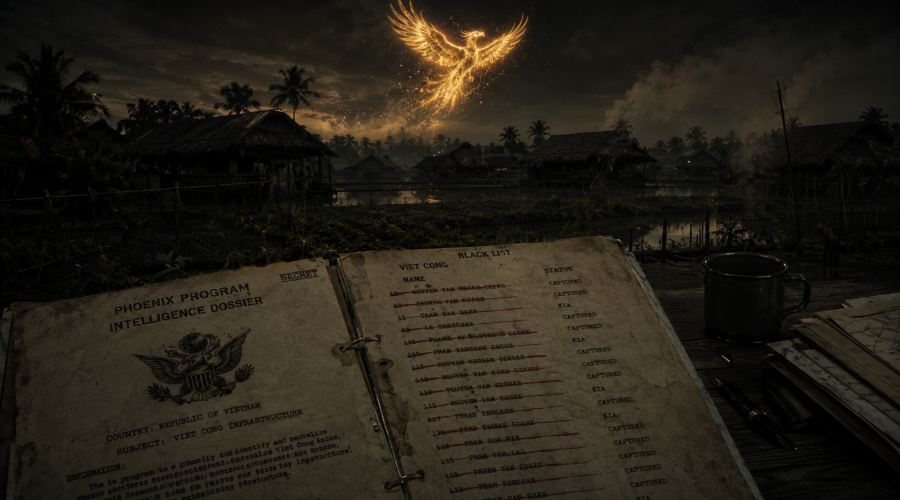
In the villages of South Vietnam, an American program ran on quiet visits, blacklists, and night raids. Names appeared on a roster; men disappeared from the next hamlet. By the time it ended in 1972, more than eighty thousand suspected Viet Cong had been “neutralized,” over twenty-six thousand of them dead. Its administrators called it the most effective counterinsurgency of the war. Its critics called it a license to murder. They called it Phoenix.
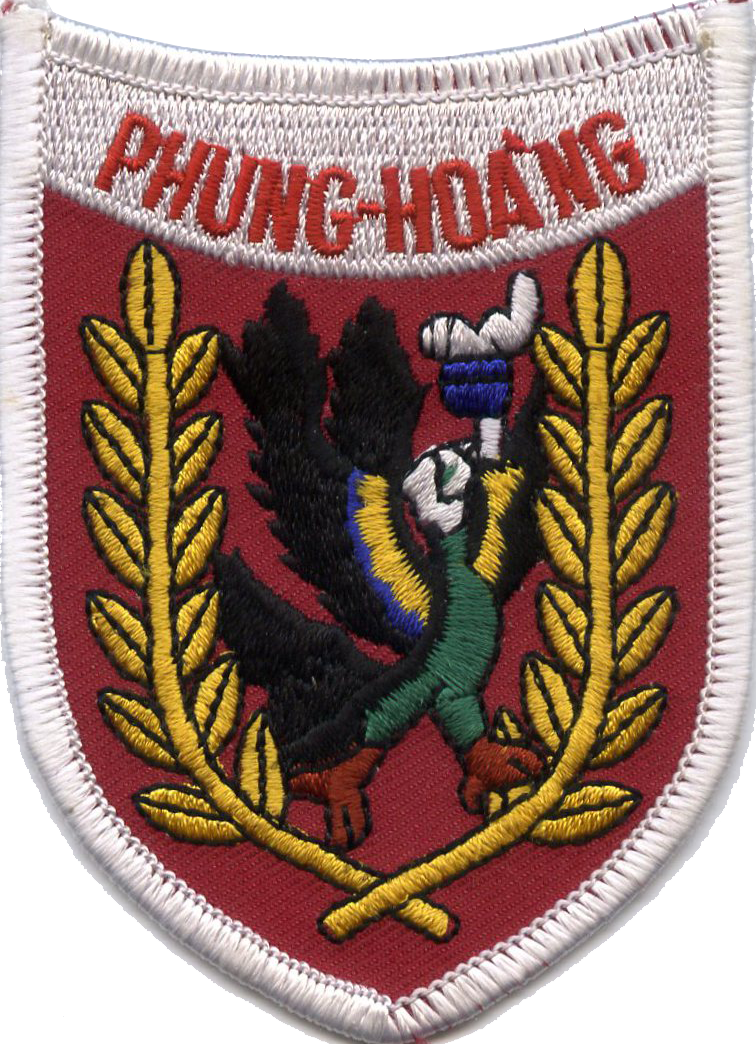
Between 1968 and 1972, an obscure office inside the U.S. mission in Saigon ran one of the largest targeted-killing programs in modern American history. The South Vietnamese name was Phụng Hoàng, after a mythical bird whose appearance was said to herald justice. The Americans translated it as Phoenix.[1] On paper, the goal was modest: identify and dismantle the political “infrastructure” of the National Liberation Front in the rural villages, arresting cadres for trial under South Vietnamese law.
What happened in practice was something else. Provincial Reconnaissance Units, organized and paid for by the CIA, conducted nighttime raids on lists of names assembled in district intelligence centers. Detainees moved through interrogation rooms where, according to sworn congressional testimony, beatings, electric shock, and worse were routine. By July 1971, the program’s own director, William Colby, told Congress it had killed 20,587 people; the South Vietnamese government’s own count was nearly twice that.[2]
The Phoenix Program was neither a rumor nor a rogue operation. Two American presidents authorized its expansion. Senior CIA officers designed it. A future Director of Central Intelligence ran it. Its files are sitting, in part declassified, at the National Archives. What follows is the documented history of how it began, how it worked, and the long shadow it has cast over American intelligence ever since.
I — The Bird With All-Seeing Eyes
The Phoenix Program was not born as a single document or a single decision. It assembled itself, piece by piece, out of older counterinsurgency efforts that had been running in South Vietnam since the early 1960s. Its formal origin lay in a CIA initiative called ICEX — the Intelligence Coordination and Exploitation program — drafted by Saigon-based agency officers in the spring of 1967. The premise was bureaucratic before it was lethal: dozens of separate American and South Vietnamese intelligence services were collecting information on the Viet Cong, and none of them were sharing it.[3]
ICEX proposed to fix that. At each of South Vietnam’s forty-four provinces, an intelligence operations and coordination center would gather names, addresses, and aliases from every available source — police informants, military intelligence, defectors, captured documents — and produce a single targeting list. South Vietnamese President Nguyễn Văn Thiệu signed a decree formalizing the arrangement on December 20, 1967.[4] The South Vietnamese called the new program Phụng Hoàng. The Americans translated the name as Phoenix and made it official inside MACV — the Military Assistance Command, Vietnam — in mid-1968.
The Tet Catalyst
Then came the Tet Offensive. On January 31, 1968, Viet Cong cadres rose in coordinated attacks across virtually every South Vietnamese city. They were militarily defeated within weeks. Yet the political effect inside the United States was the opposite. The Johnson administration, having spent years insisting the war was being won, suddenly had to explain how a beaten enemy had come within rifle range of the U.S. embassy in Saigon. In the post-Tet recriminations, two facts became unmistakable to American planners: the Viet Cong’s organized political base in the villages had been larger than U.S. intelligence had grasped, and dismantling that base now seemed urgent rather than incidental.[5]
That recognition gave Phoenix its political momentum. By July 1968, the program was operating in every province of South Vietnam under the umbrella of CORDS — Civil Operations and Revolutionary Development Support. CORDS was itself a creature of 1967, designed to merge the dozen separate American pacification efforts into a single chain of command under MACV.[6] Its first chief was a man with a temperament suited to the moment.
II — Blowtorch Bob
Robert W. Komer was a Harvard MBA, a former CIA estimates officer, and a senior National Security Council aide who had been pressing for unified pacification since 1966. President Johnson valued him for what diplomat Henry Cabot Lodge called his blowtorch effect on bureaucracies. The nickname stuck. As deputy commander of MACV with the rank of ambassador, Komer became the first U.S. official in history to serve under a military command while exercising authority over military personnel.[7]
Komer arrived in Saigon in May 1967 and threw himself at every problem he could identify. He pushed through expansion of the South Vietnamese village militias from 300,000 to over 500,000 men, increased U.S. advisers to the Regional and Popular Forces from 141 to 2,331, and grew the National Police from 60,000 to 80,000.[6] Above all, he became Phoenix’s first administrator. By his own later admission, his approach was “metrics-driven” — quotas, targets, monthly tallies of “neutralizations” reported up the chain in tables and graphs.
Komer left Vietnam in November 1968, decorated by Johnson with the Presidential Medal of Freedom. His successor at CORDS would carry the program through its most controversial years.

III — Colby Takes the Helm
William Egan Colby was, by 1968, one of the CIA’s most experienced clandestine officers. He had parachuted into occupied France in 1944 with the Office of Strategic Services, the agency’s wartime predecessor, and had served as CIA station chief in Saigon from 1959 to 1962 before running the agency’s Far East Division through the war’s escalation. When Komer left CORDS, Colby took his place and held the post until June 1971.[8] His Phoenix would become the program of record.
Colby genuinely believed in what he was doing. The maquisards he had fought alongside in occupied France had taught him that civilian political networks were what kept guerrilla movements alive; cut the network and the guerrillas had nowhere to hide. He saw the Viet Cong infrastructure — the village treasurers, propagandists, tax collectors, intelligence agents — as Hanoi’s equivalent of the French Resistance, and he believed the United States could not win in Vietnam without dismantling it.[9]
Seven Hundred Advisers
By 1970, seven hundred American Phoenix advisers were stationed across South Vietnam.[6] They worked at District Intelligence Operations Coordination Centers, where information from every source — captured documents, defector debriefings, prisoner interrogations, paid informants — was collated into target dossiers on suspected Viet Cong cadres. Each district was issued a monthly quota of “neutralizations”: between 1,800 and 3,000 priority targets nationally per year, by Colby’s later admission, with provincial totals broken out and monitored from Saigon.[10]
The strict definition of “neutralization” included three outcomes: capture, defection, or death. Yet quotas, in practice, are quotas. Province chiefs whose numbers ran low faced pressure from above. Field officers reported that pressure passed downward into the units that did the actual work — and into the hands of men who had every incentive to count any dead Vietnamese as a Viet Cong.
IV — The Provincial Reconnaissance Units
The instrument that made Phoenix lethal had been built before Phoenix existed. In 1964, CIA Saigon station chief Peer DeSilva organized small Vietnamese paramilitary teams under American advisers and called them “Counter Terror” units. The premise was straightforward and explicit: the Viet Cong used assassination and intimidation to control villages; American-led teams would do the same in reverse.[11] When the word “terror” became politically inconvenient, the agency renamed the units Provincial Reconnaissance Units, or PRUs. The mission did not change.
By 1968, the PRUs counted some 5,000 fighters organized into province-level companies of 20 to 100 men each. The CIA paid them, equipped them, and assigned an American case officer or U.S. Army Special Forces NCO to each unit.[12] On paper, they answered to the South Vietnamese provincial chief; in practice, the CIA province officer directed the targeting. Most PRU recruits were ethnic minorities — Nung Chinese, Cambodians, Montagnards, Hoa Hao — chosen partly for their fighting reputation and partly because they had no kinship ties to the Vietnamese villages they would raid.
A Marine officer who watched PRU operations in I Corps left this assessment, recorded by his commanding officer Lieutenant Colonel William Corson:
Almost immediately in the wake of the first operations of the Phoenix hit squads in I Corps, the rapport in our hamlets between the Marines, the Popular Forces and the people, as well as the intelligence flow, dried up. Upon examination we found out that the people and the Popular Forces were scared shitless that the Phoenix hoodlums would come and take them away, or kill them.
V — Inside the Interrogation Centers
Detainees who survived their initial capture were transported to one of the Provincial Interrogation Centers, or PICs — concrete-walled facilities built and funded by the CIA in each of South Vietnam’s province capitals.[13] The centers ran continuously, seven days a week, with American advisers present. South Vietnamese police did most of the actual interrogation. What happened inside became, by the early 1970s, a scandal that no one in Washington could quite suppress.
Osborn’s Testimony
In August 1971, the U.S. House Government Operations Subcommittee on Foreign Operations held hearings on the Phoenix Program. The most damning witness was K. Barton Osborn, a former military intelligence officer who had supervised agent networks in I Corps from September 1967 through December 1968. Under oath, Osborn described what he had seen at the interrogation centers.
He had watched, he told the subcommittee, the insertion of a six-inch wooden dowel into a detainee’s ear canal until it was tapped through the eardrum and into the brain, killing the man. Among the other practices he described: the starvation in a cage of a Vietnamese woman suspected of belonging to a Viet Cong political education cadre, and the routine application of electric shock to genitals. Most damning of all was his own summary observation. In his eighteen months attached to Phoenix, Osborn told the subcommittee, he could not recall a single detainee surviving interrogation alive.[14]
It became a sterile, depersonalized murder program… There was never any reasonable establishment of the fact that any one of those individuals was, in fact, cooperating with the Vietcong, but they all died and the majority were either tortured to death or things like thrown out of helicopters.
Colby later told reporters that Osborn’s account was “likely to be true” in many particulars, while disputing some specifics.[15] Other intelligence officers who served with Phoenix corroborated the broad pattern. Some defended their colleagues; some did not. None disputed that interrogation centers existed in every province, that detainees were extracted at gunpoint from villages on lists, or that monthly statistics on neutralizations flowed from Saigon to the National Security Council.
Phoenix operated on a numerical target system that Colby himself confirmed in his July 1971 testimony. Each district was assigned a monthly objective of “neutralizations.” A senior Phoenix adviser, Lieutenant Colonel Dave Watson, told the House subcommittee in 1971 that the quotas had encouraged inflation of figures and inclusion of dead farmers, peasants killed in firefights, and prisoners taken in unrelated military operations — anyone whose body could be tagged as Viet Cong infrastructure. Of those officially “neutralized” between 1968 and 1971, fully 87 percent of the deaths were attributed to conventional U.S. and South Vietnamese military operations, not to PRU action — meaning Phoenix was, in significant part, a body-count machine.[16]
VI — The Numbers and Their Meaning
The official totals are precise and difficult. CORDS records show that between 1968 and 1972, the Phoenix Program “neutralized” 81,740 individuals identified as Viet Cong infrastructure: 26,369 killed, 33,358 captured, and 22,013 surrendered or “rallied” under the South Vietnamese amnesty program.[16] Colby’s mid-1971 numbers, given to Congress, listed 20,587 killed since the start of 1968. The South Vietnamese government’s own figures, released the same year, were 40,994 killed over a similar period — almost double.[2]
How many of the dead were genuine Viet Cong cadres? No one will ever know. Some were unquestionably members of the political infrastructure. Others were peasants whose names had been turned in by neighbors with grudges, or by South Vietnamese officials seeking to extort families, or by paid informants meeting their own quotas. Congressman Ogden Reid pressed Colby on the question in July 1971:
“Are you certain that we know a member of the Vietcong Infrastructure from a loyal member of the South Vietnam citizenry?” Reid asked. Colby’s reply, on the record: “No, Mr. Congressman, I am not.”[2]
Effectiveness, Honestly Measured
Yet Phoenix did, by most credible accounts, hurt the Viet Cong politically. Captured North Vietnamese documents from the early 1970s instructed cadres to assassinate anyone connected to Phoenix; provincial committees set their own counter-quotas. After the war, communist officials interviewed by U.S. researchers acknowledged that the period from 1968 to 1972 had been the most damaging the southern movement had faced.[17] By 1971, communist cadre strength in many provinces had collapsed below pre-1968 levels — although the war was being fought, by then, by regular North Vietnamese army units rather than southern guerrillas.
Phoenix worked, in other words, on the narrow technical question of dismantling a political network. Whether it was worth doing is a different question, and the answer depends on whether you weigh military effectiveness against the deaths of thousands of civilians delivered through faulty intelligence and quota pressure into rooms where the rules of war were not enforced.
VII — Congress Looks at the Files
The first sustained American press coverage of Phoenix came from Pulitzer-winning reporter Seymour Hersh in 1968 and from journalist Georgie Anne Geyer in 1969. By 1970, the Senate Foreign Relations Committee under William Fulbright was demanding briefings. The House Government Operations Subcommittee on Foreign Operations and Government Information, chaired by Democrat William Moorhead, opened formal hearings in July 1971.[18]
The lead questioners, Republican Paul “Pete” McCloskey of California and Democrat Ogden Reid of New York, charged outright that Phoenix had produced “indiscriminate killings” and the illegal detention of thousands. Colby, called as the chief witness, gave four days of testimony. He admitted that “abuses” had occurred, but argued that the program was legal under South Vietnamese law, complied with the laws of land warfare, and was succeeding militarily.[18]
Reid was unmoved. His final assessment, entered into the record:
This program is without parallel in U.S. history. I have long felt that we should never have had anything whatsoever to do with it.
The subcommittee’s final report, issued in early 1972, concluded that the $5 billion CORDS effort had been marked by inadequate fiscal controls, imprecise targeting methods, “lack of adequate legal and detention procedures,” and serious moral concerns regarding “murder, torture, and inhumane treatment of South Vietnamese civilians.”[18] Yet no funding was cut. Phoenix had, by then, been formally transferred to the South Vietnamese government as part of the Vietnamization policy. The American operational role wound down through 1972; the program continued under South Vietnamese control until the fall of Saigon in April 1975, when the files of the National Police were captured by the North Vietnamese.[19]
VIII — Colby at the Witness Table, Again
Two years after his Phoenix testimony, William Colby returned to Capitol Hill — this time as President Nixon’s nominee for Director of Central Intelligence. His confirmation hearings in July 1973 revisited Phoenix in painful detail. Colby defended the program as necessary, lawful, and broadly successful, while acknowledging that “some unjustifiable abuses” had occurred. He was confirmed.[20]
Colby’s tenure as DCI, however, became defined by something else. In December 1974, Hersh broke the story of CIA domestic spying programs, and Colby — to the fury of agency colleagues — chose to cooperate fully with congressional investigators. The Church Committee, chaired by Idaho Democrat Frank Church, opened the next year. Church, examining the totality of CIA covert operations through the previous two decades, called the agency “a rogue elephant on a rampage.”[21]
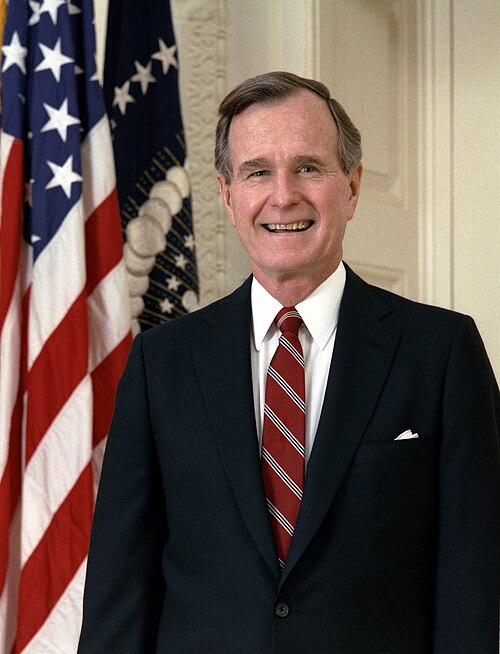
Phoenix was central to that judgment. Colby was forced out as DCI in November 1975 and replaced by George H.W. Bush, who took over an agency in disarray. Bush, sworn in on January 30, 1976, had no role in Phoenix during its operational years, but he inherited responsibility for what came next: the migration of Phoenix-tested techniques and personnel into Latin America, and from there into Cold War proxy conflicts that would consume the next decade.
IX — The Phoenix Diaspora
Phoenix did not end in 1972. It dispersed. Several of the techniques pioneered by the program — interrogation manuals, target-list methodology, integration of police and intelligence services in counterinsurgency — were already being taught at the Office of Public Safety, the United States foreign police-training program housed within USAID. From 1962 until its abolition by Congress in 1974, OPS trained more than a million foreign police officers, including in interrogation methods drawn directly from the Vietnam experience.[22]
When Congress shut down OPS, the training did not stop. It migrated into the Pentagon’s Military Advisor Program and into CIA bilateral relationships in Latin America. The KUBARK Counterintelligence Interrogation manual, written by the agency in 1963 and updated through the Vietnam years, surfaced in declassified form in the 1990s. It described in clinical detail the same psychological isolation techniques and “stress positions” that would appear, four decades later, in legal opinions written by the Bush administration after 2001.[23]
By the time the Senate Intelligence Committee released its 2014 report on CIA detention and interrogation following the September 11 attacks, the lineage was unmistakable. The black sites of the early 2000s were not improvised. The waterboarding, the sleep deprivation, the stress positions, the isolation cells — all of them had antecedents in the Provincial Interrogation Centers of South Vietnam.[24] What the war on terror called “enhanced interrogation,” Phoenix had already practiced.
X — What Phoenix Tells Us About Itself
The harder question is what kind of program Phoenix actually was. Defenders, including Colby and historian Mark Moyar, argue that it was a legitimate counterinsurgency aimed at a real political infrastructure that was using terror to control villages, that abuses were exceptional rather than systemic, and that the body count was inflated by the inclusion of routine combat deaths. Critics, including Douglas Valentine, Alfred McCoy, and Seymour Hersh, argue that Phoenix was structurally an assassination program — that its quotas, its reliance on paid informants, and its insulation from any meaningful judicial review made torture and extrajudicial killing inevitable, regardless of any individual officer’s intent.[25]
Both positions have evidence on their side. The 87 percent figure — the share of Phoenix “kills” attributed to conventional military operations — does suggest that critics have at times mischaracterized the program. At the same time, the testimony of Osborn and others, the existence of monthly quotas, the documented use of torture in the PICs, and Colby’s own admission that the program could not reliably distinguish enemies from civilians make the defenders’ position uncomfortable. Honest historiography concedes both points: Phoenix was an organized counterinsurgency that achieved measurable results, and Phoenix was a system that produced the systematic killing of people who had committed no crime under any law worth the name.
The File — Key Facts at a Glance
| Vietnamese name | Phụng Hoàng (mythical bird associated with justice) |
| Original program | ICEX — Intelligence Coordination and Exploitation |
| Formal start | July 1968 (renamed from ICEX); formalized by Thiệu decree, December 20, 1967 |
| Operational end | December 1972 (American role); continued under South Vietnam until April 1975 |
| Authorizing structure | CORDS (Civil Operations and Revolutionary Development Support), under MACV |
| First director (CORDS) | Robert W. “Blowtorch Bob” Komer (May 1967 – November 1968) |
| Second director (CORDS) | William E. Colby (November 1968 – June 1971) |
| U.S. advisers, peak | Approximately 700 (1970) |
| Operational unit | Provincial Reconnaissance Units (PRUs), ~5,000 personnel |
| Total “neutralized” (1968–72) | 81,740 (CORDS figures): 26,369 killed, 33,358 captured, 22,013 surrendered |
| South Vietnamese count, killed | 40,994 (through mid-1971)[2] |
| Congressional inquiry | House Government Operations Subcommittee, July–August 1971 |
| Key whistleblower testimony | K. Barton Osborn, August 1971 |
Coda — Why It Still Matters
The Phoenix Program closed in 1972 but never quite ended. Its files remain partially classified at the National Archives. Its veterans, in many cases, went on to long careers inside the agency and the wider U.S. national security establishment. Its operational doctrine — police-intelligence fusion, target lists generated from informant networks, interrogation regimes operating outside ordinary legal review — has been visible in every subsequent American counterinsurgency, from El Salvador in the 1980s to Iraq in the 2000s.
What made Phoenix possible was not the malice of the men who designed it. Most of them, Colby included, genuinely believed they were saving lives by destroying a Viet Cong organization that had killed tens of thousands of South Vietnamese officials, schoolteachers, and village headmen of its own. The mechanism that produced the abuses was something more banal: a quota-driven bureaucracy operating in a war zone, with imperfect intelligence, unreliable allies, and a chain of command that insulated senior officers from the rooms where the actual work happened.
That is, perhaps, the most uncomfortable lesson. Phoenix was not exceptional in its cruelty. It was exceptional in being documented, hauled into hearings, and named. Most of what it pioneered has since been generalized, formalized, and digitized — drone strike target lists, capture-or-kill missions in counterterrorism operations, biometric databases linking informant tips to night raids. The Phoenix Program is the ancestor of all of them, and the questions it raised in 1971 — Are we certain we know friend from enemy? What rules apply when an interrogator is alone with a prisoner? Who counts the dead, and who certifies the count? — have not been definitively answered in the half-century since.
Frank Church called the CIA a rogue elephant on a rampage. Whether that was a fair description of the agency is debatable. What is harder to debate is that, in the rural districts of South Vietnam between 1968 and 1972, the elephant left tracks.
References
- “Phoenix Program.” Wikipedia. Comprehensive synthesis. Link
- Testimony of Ambassador William E. Colby, House Government Operations Subcommittee, July 1971.
- Finlayson, Andrew R. “A Retrospective on Counterinsurgency Operations.” CIA Center for the Study of Intelligence.
- Villard, Erik. “A Controversial Question: Did the CIA Lead an Assassination Program in Vietnam?” Vietnam Magazine, October 2021.
- U.S. Department of State, Office of the Historian. Foreign Relations of the United States, 1969–1976, Vol. VI.
- “Civil Operations and Revolutionary Development Support.” Wikipedia.
- Jones, Frank L. Blowtorch: Robert Komer, Vietnam, and American Cold War Strategy. Naval Institute Press, 2013.
- Colby, William E., and Peter Forbath. Honorable Men: My Life in the CIA. Simon & Schuster, 1978.
- Moyar, Mark. Phoenix and the Birds of Prey. Naval Institute Press, 1997.
- GlobalSecurity.org. “Phoenix 1967–1971.”
- Valentine, Douglas. The Phoenix Program. William Morrow, 1990.
- Testimony of K. Barton Osborn, House Government Operations Subcommittee, August 1971.
- McCoy, Alfred W. A Question of Torture. Metropolitan Books, 2006.
- House Committee on Government Operations. “U.S. Assistance Programs in Vietnam,” 92nd Congress, 1973.
- Andradé, Dale. Ashes to Ashes: The Phoenix Program and the Vietnam War. Lexington Books, 1990.
- Hearings, Senate Armed Services Committee, “Nomination of William E. Colby,” July 1973.
- U.S. Senate, Church Committee Final Report, 1976.
- “Office of Public Safety.” Wikipedia.
- “KUBARK Counterintelligence Interrogation,” July 1963. National Security Archive.
- U.S. Senate Select Committee on Intelligence, 2014 Report on CIA Detention and Interrogation.
- Compare Moyar (1997) and Valentine (1990); Hersh, Seymour. “Moving Targets.” The New Yorker, December 15, 2003.
Further reading:
The Phoenix Program by Douglas Valentine — the foundational journalistic account.
A Bright Shining Lie by Neil Sheehan — Pulitzer-winning account of pacification and CORDS.
Kill Anything That Moves by Nick Turse — places Phoenix in the wider pattern of civilian casualties.
Legacy of Ashes by Tim Weiner — Pulitzer-winning CIA history with substantial Vietnam coverage.
Decoding History — delivered to your inbox.
Subscribe for free and you’ll be the first to know when our next long-form investigation drops.
Subscribe Now
[…] earlier investigations. We saw it in Operation Paperclip’s absorption of Nazi scientists, in the Phoenix Program’s counterinsurgency in Vietnam, and in Operation Ajax in Iran. Gladio is the European chapter of the […]